
"17 name"
3000 article(s) found

17 things you don't know about coffee
one. Although it consumes 1.6 billion of the world's leading colas and 1.7 billion cups of coffee a day. Coffee wins! 2. The United States is responsible for 35% of global coffee consumption. This means that 3 million people drink about 4 million cups of coffee a day in the United States. The first coffee advertisement appeared in American newspapers in 1790. four. The coffee machine was invented in Italy in 1901. The man's name is Luigi Bezzera.
Does Brazil have 17 states that produce coffee?
Brazil is vividly compared to the giant and monarch of the coffee world. There are about 3.97 billion coffee trees there, and small farmers now grow 75% of the country's coffee. The number of coffee producers in Brazil is twice or even three times that of Colombia, the second largest coffee producer in the world. Unlike in the past, Brazil's economy is less dependent on coffee.

Open in the coffee shop on the CBD office building in Guangzhou, sneak out during office hours and hea for an afternoon
Communication of professional baristas Please follow the coffee workshop (Wechat official account cafe_style) some shops feel very interesting when they hear their names. The afternoon of the 17th is such a coffee shop. Echo, who is not very sensitive to numbers, is fascinated by things about time. I always feel that when a lot of things are linked to time, they become very interesting and have a story. In the end, this store is out.

Cafe on the afternoon of the 17th | A life to share the good times together
Address: room 216F, Block B, R & F Yingfeng Building, 2 Huaqiang Road, Pearl River New City Tel: 13265095175 Business hours: 10:00-20:00 (closed on Thursday) per capita: 50 yuan 17 has a homonym in Putonghua, and the afternoon is a kind of genial and leisure state, which means to share the good time together. Although the space of the shop

Classification and classification of coffee beans | meaning of the name of coffee
For more information on coffee beans, please follow the coffee workshop (Wechat official account cafe_style)-- how coffee is named-- G1, G2, G3, G4, AA, PB, SHB, SHG, EP, PLANTATION. Have you ever wondered what the difference is? Are you curious about what they are referring to? Today we are going to start talking about what we usually buy

Sharing the good times together: the afternoon of the 17th
Address: room 216F, Block B, R & F Yingfeng Building, 2 Huaqiang Road, Pearl River New City Tel: 13265095175 Business hours: 10:00-20:00 (closed on Thursday) per capita: 50 yuan 17 has a homonym in Putonghua, and the afternoon is a kind of genial and leisure state, which means to share the good time together. Although the space of the shop is not
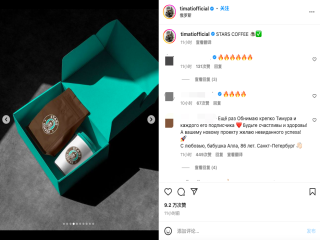
The Russian version of Starbucks officially changed its name to "Star Coffee"!
On the evening of Aug. 17, Russian rapper Timur Yunusov (TimurYunusov) suddenly posted a set of pictures on his Ins account showing the Russian version of Starbucks renamed "STARSCOFFEE" and the final logo. STAR

Coffee on the tip of the tongue 17 things you don't know about coffee
one. Although it consumes 1.6 billion of the world's leading colas and 1.7 billion cups of coffee a day. Coffee wins! 2. The United States is responsible for 35% of global coffee consumption. This means that 3 million people drink about 4 million cups of coffee a day in the United States. The first coffee advertisement appeared in American newspapers in 1790. four. The coffee machine was invented in Italy in 1901. The man's name is Luigi Bezzera.

What exactly does the name of coffee mean?
1. What is the amount of information contained in the name of the raw coffee bean? 2. Why is it that sometimes the manor comes first in the name of the coffee bean, and sometimes the description of the treatment and grade is interspersed with it? what is the naming rule? Is there a uniform standard? 3. How to see the grade from the name of the raw coffee bean? This article will provide an in-depth answer to how to treat the naming of coffee beans, and

Introduction to the flavor characteristics of coffee beans treated with honey from avocado manor, the 17th prize of COE in El Salvador.
Professional coffee knowledge exchange more coffee bean information please follow the coffee workshop (Wechat official account cafe_style) El Salvador coffee avocado manor Pacamara recommended: an extremely colorful and complex platter of tropical fruits! Flavor description: elegant, fresh jasmine, elegant tropical fruit, sour, sweet, delicious apricot, mango, peach, full, juicy, high into the clouds

Introduction to Indonesian Manning Coffee with strong flavor, fragrant, bitter and mellow
In the 17th century, the Dutch first introduced Arabica saplings to Ceylon (present-day Sri Lanka) and Indonesia. In 1877, a large-scale disaster hit the Indonesian islands, coffee rust destroyed almost all the coffee trees, people had to give up Arabica, which had been in operation for many years, and introduced the disease-resistant Robusta coffee tree from Africa. Today's

Coffee bean caffeine content table caffeine content of Swiss washed coffee
For the exchange of professional baristas, please pay attention to the coffee workshop (Wechat official account cafe_style) Arabica related varieties caffeine content meter origin coffee name caffeine content (word represents 100% of bean weight) Yemen Mocha (Matali) 1.01 Zimbabwe 1.10 Ethiopia Piahara 1.13 Mexico (Altura Pluma) 1.17 Mocha Java Synthesis 1.17 Brazil bourbon 1.
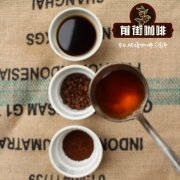
What are the common ways to handle raw coffee beans? What is the difference between solarization and washing? Coffee-producing country
Professional coffee knowledge exchange more information about coffee beans Please follow the common handling methods of raw coffee beans in the coffee workshop (Wechat official account cafe_style). What is the difference between solarization and washing? What is the grading system of raw beans in large coffee-producing countries? 1. Grading: after the seeds are taken out, the seeds are screened and graded, and Guatemala, Costa Rica and other countries are rated according to the planting height.

Read through the amount of information in the name of raw coffee beans
When we come into contact with coffee beans, we often see descriptions such as: Manning G1, GAYO Mountains, Aceh District, Sumatra, Indonesia. Do you often have the following questions: 1. What is the amount of information contained in the names of raw coffee beans? 2. Why sometimes the manor comes first in the name of coffee beans, and sometimes the description of treatment and grade is interspersed with its
Start with coffee beans (17)-- America-Brazil
Brazil, a low-acidity, moderately roasted coffee bean from the World Coffee Center, is vividly compared to the giant and monarch of the coffee world. There are about 3.97 billion coffee trees there, and small farmers now grow 75% of the country's coffee. The number of coffee producers in Brazil is twice or even three times that of Colombia, the second largest coffee producer in the world.
Classification standard of raw coffee beans
There are two ways to classify raw coffee beans, one is the filter number, and the other is the elevation.
Yemeni mocha coffee: slightly sour and then strong
Follow the comments (Wechat official account vdailycom) found that the beautiful cafe opened a small shop of its own. Although Ethiopia was the first country in the world to discover coffee, Yemen was the first country in the world to produce coffee on a large scale as a crop. In the 17th century, the first batch of Yemeni coffee was exported to Europe through the ancient port of Mocha. This is Mocha.

Brazilian sweet coffee
Brazilian coffee generally refers to coffee produced in Brazil. There is a wide variety of Brazilian coffee, the vast majority of which are unwashed and sun-dried, classified according to the name of the state of origin and the port of transport. Brazil has 21 states and 17 states produce coffee, but four of them produce the largest, accounting for 98% of the country's total output. Brazilian coffee has a low sour taste, which goes well with coffee.

Introduction to boutique coffee beans-- the characteristics of Mantenin Coffee
The Dutch introduced Arabica seedlings to Ceylon (present-day Sri Lanka) and Indonesia for the first time in the 17th century. In 1877, a large-scale coffee rust hit the Indonesian islands, destroying almost all coffee trees. People had to give up Arabica, which had been in operation for many years, and introduced Robsta coffee trees with strong disease resistance from Africa. Indonesia today is a coffee producer.
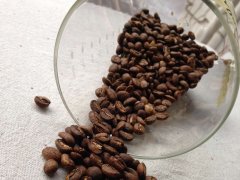
There are two ways to grade green coffee beans.
There are two ways to grade coffee beans, one is to filter the number of points, one is to elevation points. The size of the round beans is generally smaller than the flat beans, the round beans are between 8-13, and the flat beans are between 12-29. 8,9,10... 12,13... 18... 29= ,,......, Extra large. The bigger the number, the bigger the bean. SC-19, for example, is bean number 19.